

The Role of Heavy-Caliber Rifles in Hog and Predator Control
New Blog from Big Horn Armory’s From the Vault Series
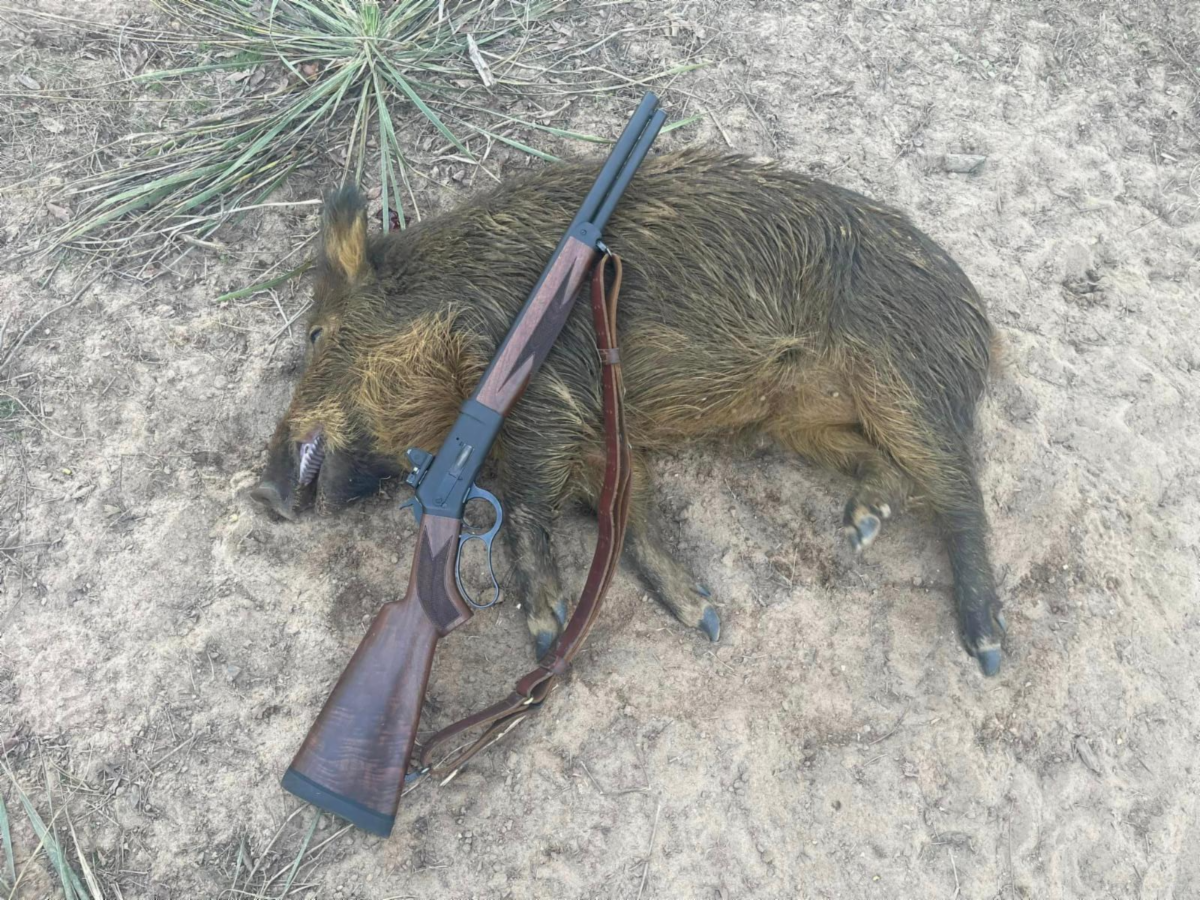
A feral boar does not offer the soft, forgiving target a whitetail does. Across his shoulders he grows a shield: a slab of calcified cartilage and old scar tissue that thickens with every year and every fight, sometimes better than an inch through the middle. Behind it lies dense, heavy bone. A marginal bullet flattens against that armor or stalls somewhere inside it, and the hog that should have folded instead runs into thick brush, in the dark, and now thoroughly educated. Predator and hog control is not a contest of energy on a ballistics chart. It is the plain problem of driving a heavy, well-built bullet through obstruction and out the far side. That is a job for a big-bore caliber.
The Animal Is Built to Defeat Your Bullet
Sectional density and construction matter more here than velocity or a flat line of flight. A light, fast bullet is designed to expand quickly and dump its energy near the surface, exactly the wrong behavior when there is an inch of gristle and a shoulder joint standing between the muzzle and the boiler room. A heavy .50-caliber projectile does the opposite. It carries its mass deep, resists deflection off angled bone, and keeps a wide wound channel from entrance to exit. Factory loads in this class run from roughly 350 grains up past 600; handloaders push hard-cast and monolithic solids heavier still. Frontal diameter starts at half an inch before the bullet ever begins to open.
The result is penetration with margin to spare. In independent testing, reviewers found the .500-caliber Big Horn Armory rounds punch through automotive sheet metal as readily as soft tissue, a useful proxy for what heavy bone and shield plate do to lesser cartridges. Against a quartering hog or a bear that turns at the shot, that reserve is the difference between a recovered animal and a long night with a flashlight.
Duke Atkins, a retired Houston police lieutenant who put a Model 89 in .500 S&W Magnum through more than a hundred hours in a Texas deer stand, saw exactly that reserve at work. His 350-grain load struck slightly behind the foreleg, drove through bone in a channel nearly two inches wide, opened a fist-sized hole through the chest wall, and exited in front of the off shoulder. The hog never took a step.
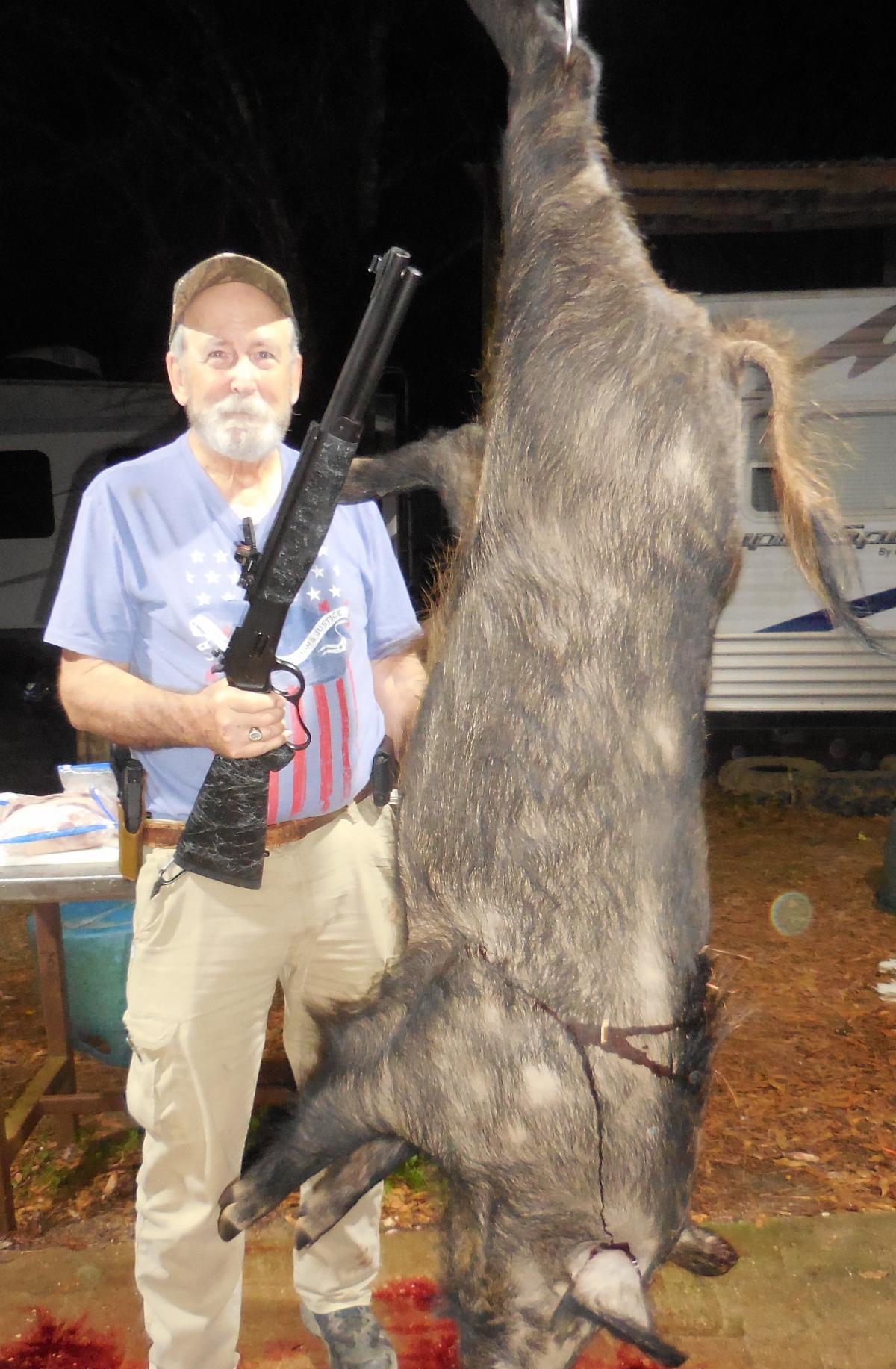
“Hog went down hard in his tracks.”
— Duke Atkins, retired Lieutenant, Houston P.D. — Model 89, .500 S&W Magnum
Learn Why the BHA Difference Matters
About Big Horn Armory:
Big Horn Armory was founded in 2008 with the expressed intention of designing a Browning-type lever-action gun chambered in 500 Smith & Wesson Magnum. The Big Horn Armory Model 89, made in America, closely follows the work of John Browning with refinements courtesy of modern metallurgy and machining capabilities. The first rifles began shipping in September of 2012 and since then, BHA has added to their big bore lineup with a Model 90 Carbine in 460 S&W, the Model 90A in 454 Casull, the Model 90B in .45 Colt, the Model 89A in 500 Linebaugh and the Model 89B in .475 Linebaugh. In 2017, Big Horn Armory took a departure from its lever-action series and developed the AR500 Auto Max, the most powerful short-range, semi-auto based on an AR .308 platform.

 FOG HORN