
This Armored Humanoid Robot Is Built to Go Where Soldiers Shouldn’t
Oct 28, 2026
(Source: iHLS)
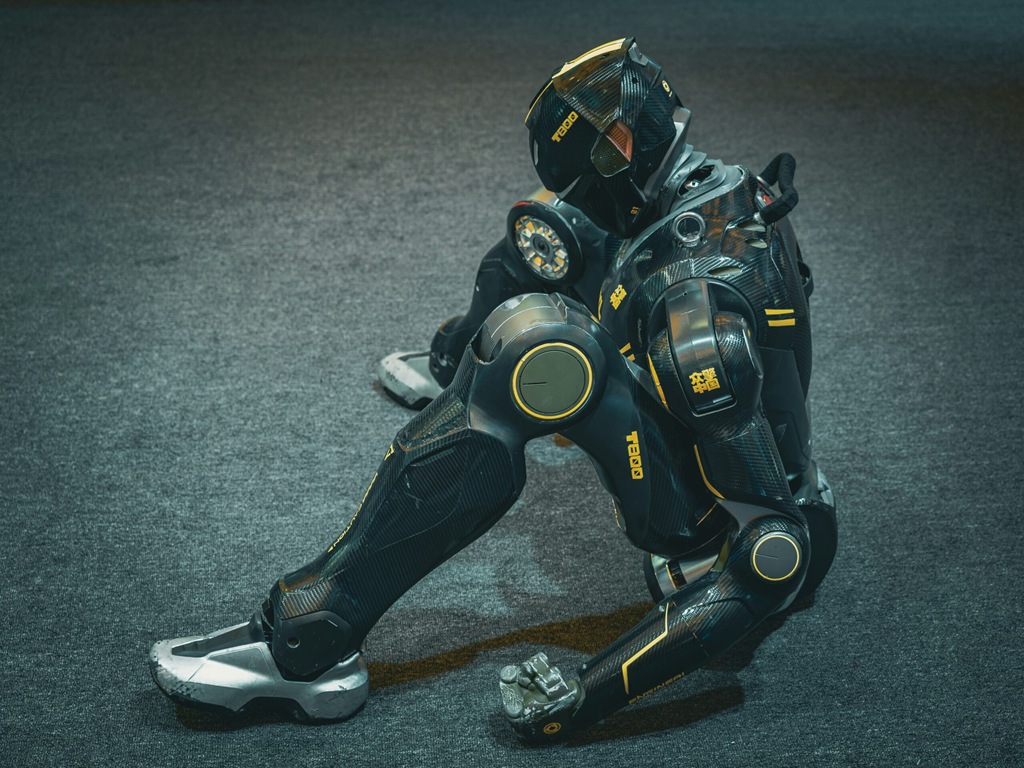
Representational image of a humanoid robot
This post is also available in:  עברית (Hebrew)
Robots can already fly reconnaissance missions, carry supplies and enter areas considered too dangerous for people. But many real-world environments are still designed around the human body: stairs, doors, tools and equipment all assume a person will be doing the work. That creates a potential role for humanoid robots that can move and interact with their surroundings in more human-like ways.
A robot called Alex is being explored for exactly that purpose after winning the U.S. Army’s xTechHumanoid competition.
Developed by the Florida Institute for Human and Machine Cognition (IHMC), the robot weighs approximately 85 kilograms including its battery and combines ballistic protection, impact-resistant actuators and a hybrid autonomy system.
Rather than relying entirely on either AI or remote control, the robot blends autonomous capabilities with human input. This approach could allow the robot to handle parts of a mission independently while keeping a human operator involved when judgment or direct control is required.
According to NextGenDefense, the platform is intended to function as part of a squad rather than as an isolated machine. Its combination of mobility, durability, search capabilities and autonomy could eventually allow it to enter hazardous areas before soldiers do.
Its impact-resilient actuators are particularly important for that role. Humanoid robots contain numerous powered joints that must remain functional while walking, balancing and interacting with objects. A system intended for military environments also needs to tolerate impacts and physical stresses beyond those encountered by laboratory robots.
Ballistic protection adds another layer of survivability for operations where the machine could be exposed to hostile fire.
The technology could also extend beyond military missions. The institute says it could potentially operate as a robotic avatar for first responders, allowing personnel to search dangerous environments while remaining farther from hazards.
The Army competition also highlighted technologies addressing other challenges facing humanoid robots. Winning entries included software that converts command information and commander intent into robotic actions, compact power generation for extended operations, scalable energy-storage systems and fingertip tactile sensors capable of detecting force, shape and object slippage.
Together, these technologies illustrate why deploying humanoids involves much more than building a robot that can walk. A useful field system needs power, perception, physical dexterity, resilient hardware and software capable of translating human objectives into actions.
The institute plans to reduce its weight, which could improve its speed and overall performance.
For defense and homeland security, the attraction of humanoid robots is ultimately practical. If an environment is built for humans but too dangerous to send one in, a machine with a similar physical form could potentially enter first, while the person making the important decisions remains at a safer distance.


