

I want to begin by apologizing for the technical discussion, unfortunately it is necessary when it comes to AI. I ask that you bear with it.
Artificial Intelligence has transitioned from heuristic-based automation to massive-scale statistical learning. The current trajectory of AI points toward unprecedented capabilities in data synthesis, autonomous reasoning, and cross-domain optimization.
The modern explosion of AI capability relies on a trifecta of technological advancements:
-
The Transformer Architecture: At the heart of current foundation models is the Transformer mechanism, which utilizes self-attention layers to process data in parallel. This allows the system to weigh the relevance of different parts of an input dataset regardless of distance, enabling deep contextual understanding.
-
Massive-Scale Parallel Computing: The transition from traditional CPUs to highly parallelized accelerators like GPUs and TPUs has made it computationally feasible to train models with hundreds of billions—or even trillions—of parameters.
-
Heterogeneous Data Ingestion: Modern AI isn’t limited to structured databases. It can ingest, tokenize, and find patterns across text, code, audio, high-resolution imagery, and molecular structures simultaneously (Multimodality).
That’s the 30,000 foot view. AI has tremendous potential but it brings problems that need to be recognized and considered prior to an implementation. Succinctly stated, AI lacks logic but is a great mathematician
All of the images below are AI generated
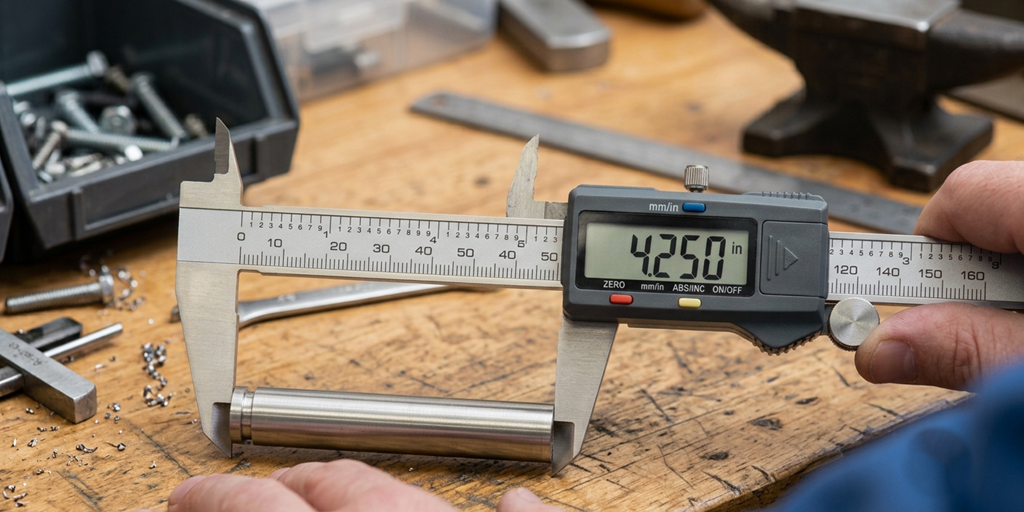
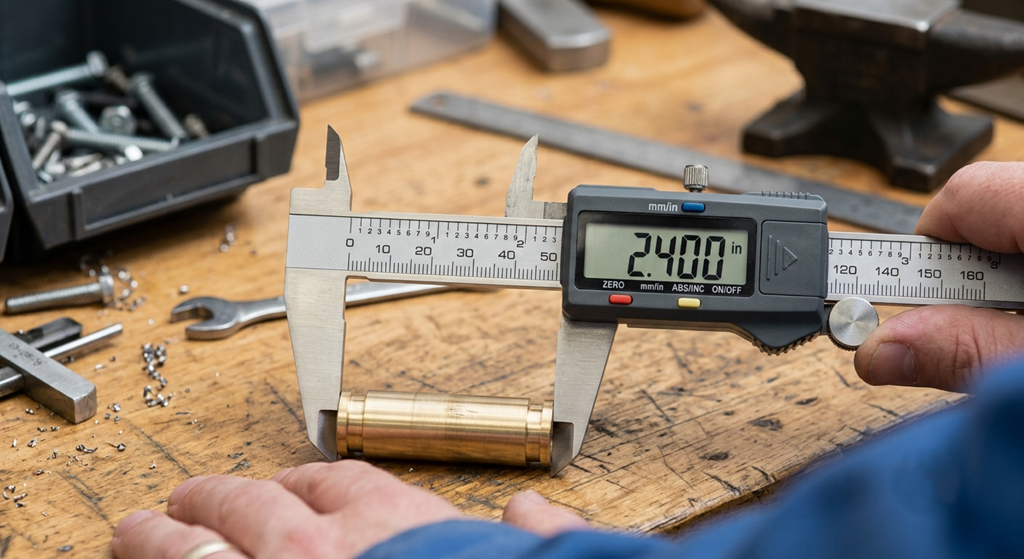

Did you look the images over? If you did, then you’ve arrived at the conclusion that there is no logical connection between the digital display with the caliper position. Only one image of the three, the middle one, accurately correlates the digital display with the mechanical measurement. Why is that?
Unlike humans, AI treats images with mathematical equations, so decisions based on image processing will have multiple results. Let me present one possible scenario.
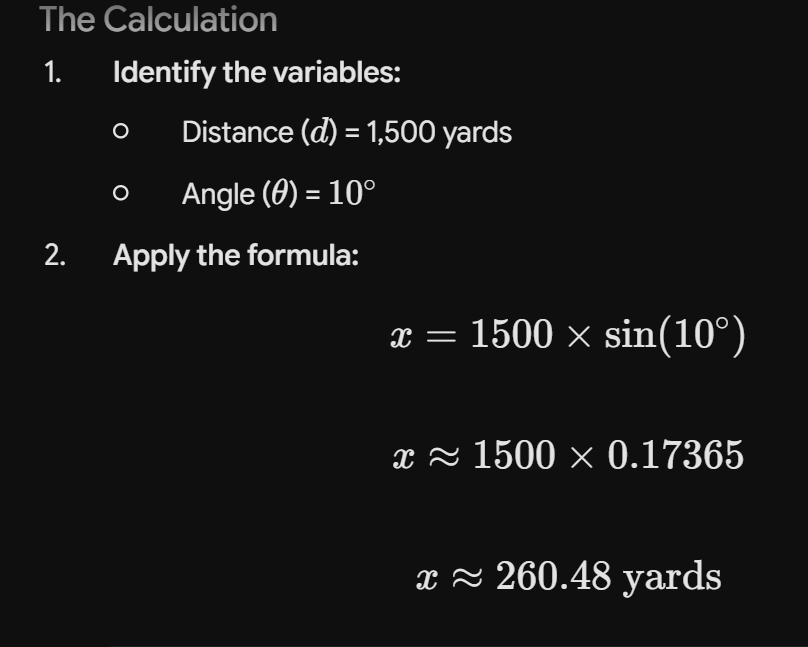
You’re operating a drone in a GPS denied area, so you upload an aerial image of the location and pinpoint the target at a bearing of 220 and a range of 1500 yards (nothing special about those numbers, they can be any value)
AI reads the image and makes a 10 degree error in its calculation. That 10 degree error results in this:

To wrap this article up, if you are implementing AI in your manufacturing facility and working off of mechanical drawings delay any large scale implementation. Instead, create a development environment where you can evaluate output until such time as you have a statistically acceptable confidence interval that what’s rolling of your production test line is precisely what your design calls for consistently.


