
A New Way to Stop Drones: Just Listen
May 22, 2026
(Source: iHLS)
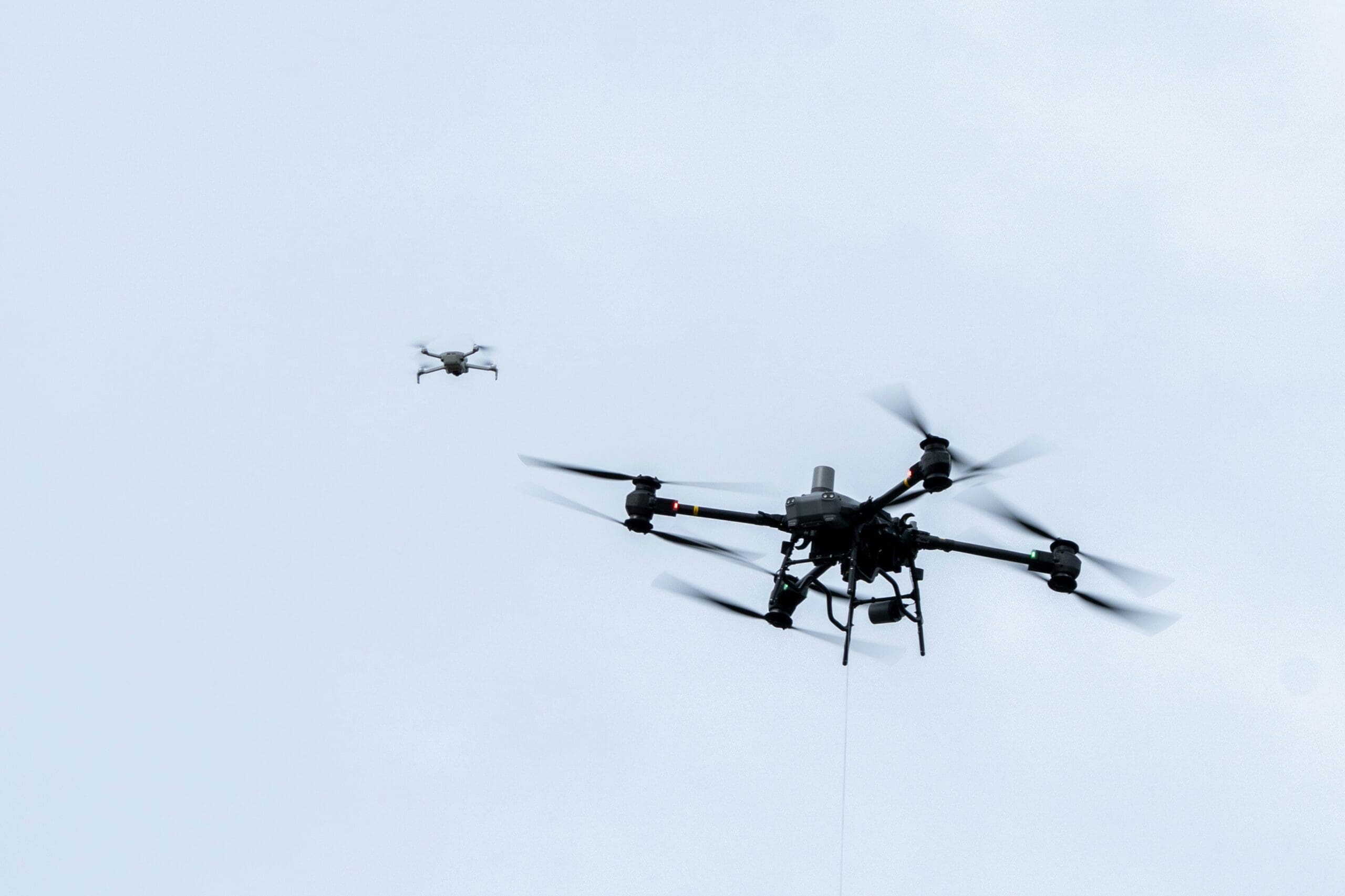
Representational image of drones
This post is also available in:  עברית (Hebrew)
As small drones become more accessible and harder to detect, traditional air defense methods are facing growing limitations. Many systems rely on radar or visual tracking, which can struggle with low-flying or slow-moving drones, especially in cluttered environments. This creates a need for additional detection layers that can identify threats early, even when visibility is limited or signals are weak.
Recent field trials in Poland are exploring an alternative approach based on sound. A series of acoustic detection platforms have been tested to identify and track drones in real time by analyzing their unique audio signatures. These systems use arrays of sensors to capture sound patterns generated by drone motors and propellers, then process the data to determine direction, distance, and movement. According to NextGenDefense, by focusing on acoustic cues, they can operate in conditions where other detection methods may be less effective.
Artificial intelligence plays a central role in making this approach viable. Machine learning models are used to filter background noise, classify different types of drones, and improve tracking accuracy. This allows the system to distinguish between potential threats and everyday environmental sounds, while also enabling faster decision-making. Alongside the acoustic platforms, a separate set of electronic warfare tools has been evaluated for its ability to detect and interfere with drone communications, adding an active response layer to the overall system.
Beyond detection, the systems are designed with integration in mind. Developers have indicated that both the acoustic sensors and electronic warfare components can be connected directly to existing command and control networks, allowing operators to combine multiple data sources into a unified operational picture. This supports quicker coordination between detection and response elements.
From a defense standpoint, combining passive acoustic sensing with electronic warfare capabilities offers a more resilient approach to countering drones. Passive systems can operate without emitting signals, reducing the risk of detection, while electronic warfare tools provide options to disrupt or neutralize incoming threats. As testing continues, the results will inform decisions on broader deployment and future development.
The ongoing evaluations highlight a shift toward multi-layered drone defense, where different sensing technologies work together to address an evolving threat landscape.


