
I hope you’ve all had an outstanding 4th of July. If you did any grilling, you felt the impact inflation has had on the staples, a condition that’s unlikely to change until we give the Green New Deal a rest and focus on implementing strategies that make sense.
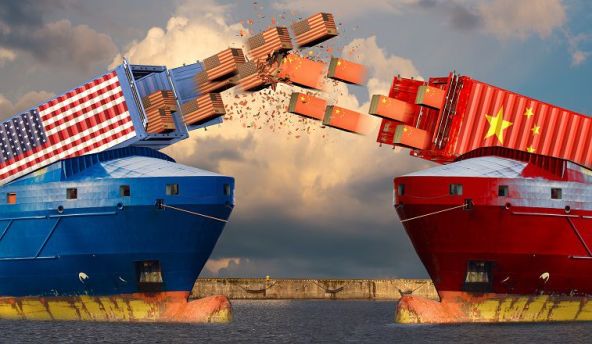
In this shoot the shit we’ll talk about tariffs, how they function and some of the pros and cons. This will be a non-technical discussion, so you won’t feel like you need to spend time on the couch of a jackass who majored in psychology so they can understand themselves.
For those new to the concept of a shoot the shit, it is a social interaction during which any subject is discussed, participants don’t need to know anything about the topic, they can make any unsupported comment, use uncensored profanity, insult anyone they wish or change the subject at will.
So, let’s get started…
A tariff is a trade barrier imposed on imports to protect domestic markets. Unlike what you may have thought, the exporter, or their country, does not pay the tariff, it is paid by the importer, and results in a higher cost to manufacturers, distributors, retailers, and consumers. So, if you manufacture widgets and need to import 1/4-20 screws from a supplier in a tariffed country, your production cost will be higher due to the imposed tariff. You’ll look for a lower cost source, if one is available, or you’ll subsequently sell your widget at a higher price to recover cost.
Tariff policy is a Congressional responsibility but delegated to the Executive Branch where it is administered by the International Trade Administration. US Customs and Border Protection Service is responsible for collecting the tariff.
A tariff has the following impacts:
-
-
The tariff imposed on the 1/4-20 screws makes the imported screw more expensive than a domestically produced screw, or one imported from a country that’s not tariffed
-
To protect its markets, the tariffed country could devalue its currency, which is what China does readily, or tries to position itself as a sole supplier. China is actively working to achieve that goal across several critical sectors.
-
The impact of tariffs falls on the consumer. The consumer has three options:
-
They can substitute – which means substituting the higher priced widget with a dumaflache.
-
They can altogether forgo buying the widget if it’s not essential, which has a deleterious impact on the overall economy.
-
If the widget is a necessity and there are no acceptable substitutes, the consumer pays the higher price.
-
-
On the aggregate, United States tariffs average about 2% of the total product value. In most cases, the United State does not impose import tariffs; however, due to aggressive Chinese trade policies, the United States currently imposes a 25 percent tariff on approximately $250 billion of imports from China, and a 7.5 percent tariff on approximately $112 billion worth of imports from China. (Note, tariffs are based on product types, so a screw may be tariffed at 7.5% and an electronic chip may be tariffed at 25%.)
Who benefits from tariffs
-
The United States government. They see increased revenues
-
Domestic industry benefits because their market share is protected, due to the higher import product price
Who suffers from tariffs
-
The consumer
- Foreign companies who compete fairly
I hope this helps you understand what tariffs are and some of their associated dynamics, good and bad.
Have a great weekend and schedule your own shoot the shit.


