
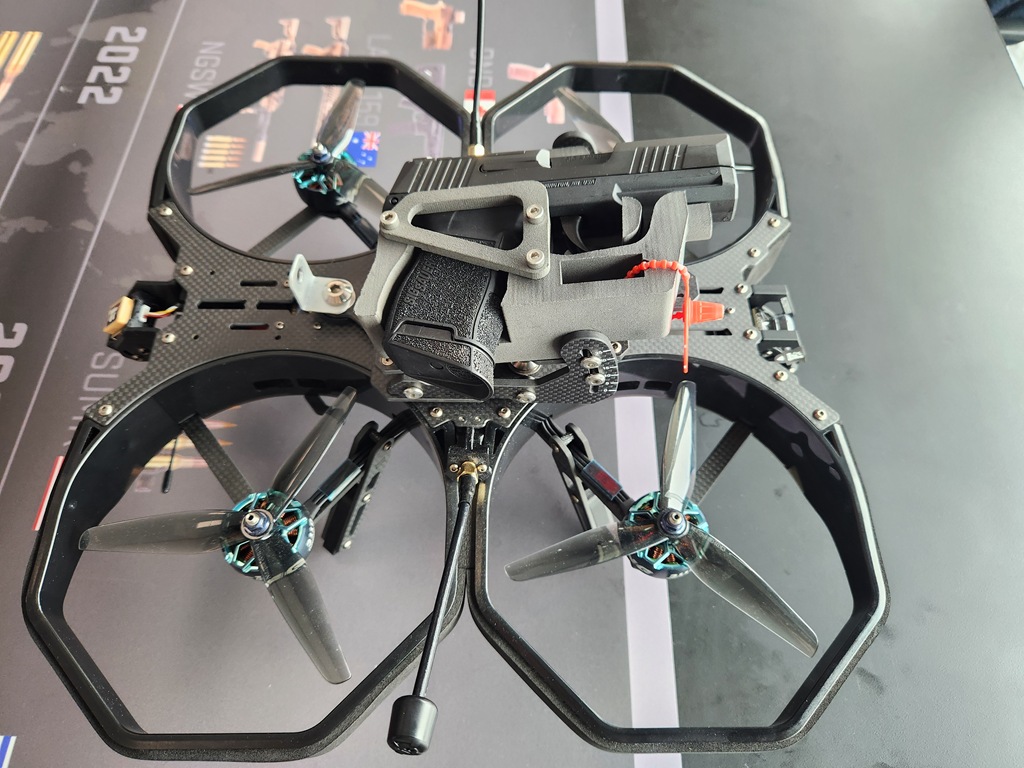
Sig Sauer’s Weaponized Drone
SIG SAUER’s foray into weaponized drone technology likely hinges on a combination of SIG’s expertise in firearms and emerging capabilities in unmanned aerial systems. Their approach involves integrating a highly stabilized small unmanned aerial vehicle (SUAV) platform with a modified 9mm pistol or a purpose-built delivery mechanism for the round.
Key aspects of SIG’s approach include:
-
Precision Targeting: The effectiveness of such a system relies heavily on advanced targeting and tracking capabilities. This would necessitate sophisticated electro-optical/infrared (EO/IR) sensors, coupled with AI-powered object recognition and tracking algorithms. Operators would likely designate a specific individual, and the drone would autonomously or under operator control track and maintain a firing solution, even with target movement.
-
Stabilization Technology: Delivering an accurate shot from a moving aerial platform presents significant challenges. SIG’s system would undoubtedly incorporate advanced stabilization gimbals and flight control systems to counteract wind gusts and the drone’s own movements. This could involve multi-axis stabilization and real-time adjustments based on sensor feedback.
-
Miniaturization and Payload Management: Integrating a 9mm pistol or a firing mechanism adds weight and complexity to the SUAV. SIG’s engineers have focused on minimizing the weight and size of the weapon system while ensuring reliable operation. This involves a stripped-down version of an existing pistol or a custom-engineered single-shot delivery system.
-
Safety Mechanisms: Preventing accidental discharge and ensuring controlled operation are paramount. The system would likely incorporate multiple safety layers, including electronic arming/disarming mechanisms, positive firing control by the operator, and potentially even environmental sensors to prevent firing in unsafe conditions.
-
Communication and Control: A secure and robust communication link between the operator and the drone is crucial for real-time control and situational awareness. This would involve encrypted data transmission for video feeds, targeting information, and firing commands.
Effectiveness of the System: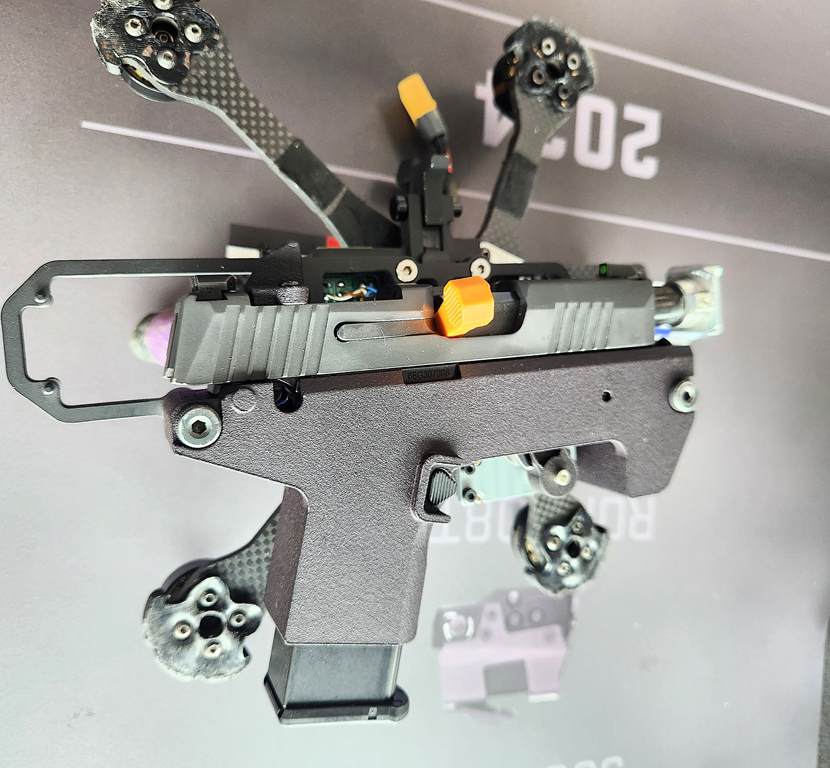
-
Precision and Reduced Collateral Damage: The primary advantage of SIG’s approach lies in its potential for extreme precision. Unlike larger explosive ordnance, a 9mm round delivered accurately to a specific point on a target significantly reduces the risk of collateral damage to surrounding individuals or infrastructure. This makes it a potentially valuable tool in scenarios where minimizing unintended harm is critical.
-
Remote Engagement: The drone allows for remote engagement of targets, keeping personnel out of harm’s way. This is particularly advantageous in high-threat environments or when dealing with heavily fortified positions.
-
Enhanced Situational Awareness: The drone’s sensors provide real-time aerial surveillance, offering operators a comprehensive understanding of the operational environment before and after engagement.
-
Speed and Responsiveness: A drone can potentially reach and engage a target much faster than ground-based forces in certain situations, offering a rapid response capability.
Are there potential limitations:
-
Lethality: While a 9mm round can be lethal, its effectiveness in immediately incapacitating a target might be variable depending on shot placement, bullet geometry and the target’s physiological response. Multiple shots might be necessary, adding complexity to the system.
-
Environmental Factors: Weather conditions like strong winds could significantly impact the drone’s stability and accuracy.
-
Countermeasures: Potential adversaries could develop countermeasures to detect, track, and neutralize such drones.
-
Ethical Considerations: The deployment of lethal autonomous or semi-autonomous weapon systems raises significant ethical and legal questions that would need careful consideration.
In conclusion, SIG SAUER’s development of a 9mm-armed drone represents a significant step in integrating aerial platforms with direct-fire capabilities. While the system offers the potential for highly precise targeting and reduced collateral damage, its effectiveness will depend on overcoming technical challenges related to stabilization, payload management, and ensuring operational reliability. The ethical implications of such technology will also need careful scrutiny as it moves from the exhibition floor to potential deployment. SIG’s weaponized drone technology is still under development but given SIG’s global reputation for delivering accurate, reliable and effective platforms our operators my have enhanced capabilities previously unavailable to them.

 FOG HORN