
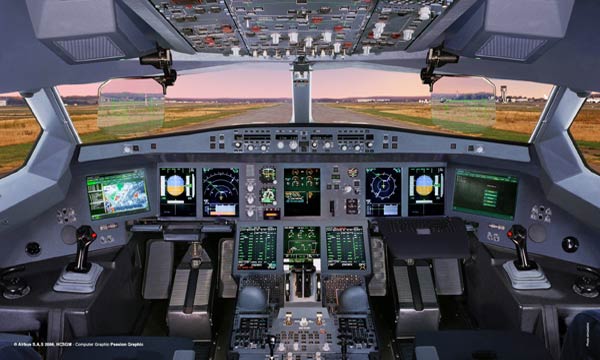
 The crash of Air France’s Flight 447 was the deadliest aviation accident in Air France’s history. The accident took the lives of 216 passengers and 12 crew members. I understand that the investigation is still underway but the preliminary findings bewilder me.
The initial postmortem suggests that an aerodynamic stall was the cause of the accident and minutes before the stall the pitot tubes started to give inconsistent speed readings; suggesting that they were icing up. Here’s my problem.
An aerodynamic stall can occur at any speed throttle setting and in any configuration, meaning you can be clean – flaps retracted and gear up, or you can have flaps fully extended and landing gear down. An aerodynamic stall occurs when the airflow over the leading edge of the wing is disrupted to the extent that you lose lift. Stall speeds are aircraft specific and are listed in terms of indicated airspeed. For example, a light aircraft with flaps retracted can stall at an indicated airspeed of 65 m.p.h. A pilot can apply full throttle and change the aircraft’s attitude by pulling back on the elevators; raising the nose of the aircraft thus increasing the angle of attack to the point where airflow over the wing is disrupted, air speed drops and the wing stalls. A stall can occur at any airspeed throttle setting in a turn, in a climb and a variety of maneuvers where the indicated airspeed drops to the rated indicated airspeed.
The pitot tube, senses air pressure and provides airspeed information to the cockpit instruments as well as the automatic pilot. It is my understanding, that the autopilot disengaged in Air Frances’ case, which meant that the pilots had to take manual control of the aircraft. Other than ice forming on the wings causing a loss of lift, how the heck do you stall an Airbus at cruising altitude with the variety of instruments available to the pilot.
Let’s assume that the aircraft was flying straight and level. For some reason or another the pitot tube failure causes the autopilot to believe that the airspeed was higher than it actually was. So, the engine thrust is reduced correspondingly. As altitude drops the pilot applies elevator resulting in a further reduction of airspeed. As a result, airspeed drops to the point where the wing stalls…
Situations such as this would create so many telltale signs that it’s hard for me to comprehend how a stall can occur at cruising altitude. Moreover, what circumstances existed that the pilot could not recover from the stall. Even in conditions where the horizon is not visible, there are instruments in the cockpit that would make airspeed and attitude changes detectable.
So, how the heck do you stall an Airbus at cruising altitude and not recover from the stall. It is beyond me I have to admit.
Aviators feel free to chime in with comments!
Revision:
I’ve committed the cardinal sin of writing and that is – writing when something ticks you off. You’ll always make mistakes or misstatements. Having said that I have a few corrections that I’d like to make to the original post.

 FOG HORN